
Private Walking tours of Europe's most beautiful city
Explore Prague on a private walking tour with local historian Alex Went. Prague Story specializes in small-group experiences for individuals, couples, families and friends, with a maximum of four visitors per tour. Walks last between two and three hours, and can be fully tailored to suit your personal interests, all brought to life with expert storytelling. No crowds. No umbrellas. No script. Just the story of Prague.

ABOUT ALEX
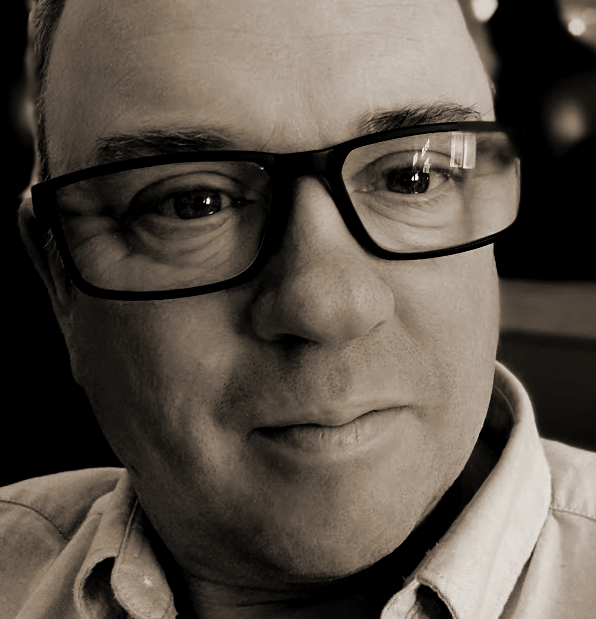
Alex Went studied at Cambridge University and taught in the UK for many years before coming to live in the Czech Republic. This country's rich history is a constant inspiration, and the source of the fascinating stories that underpin his guided walks. Alex has led courses on architectural heritage for Charles University and other educational institutions in Prague; and as well as tour guiding, he designs websites for clients across Europe and the UK.
ABOUT PRAGUE
From its mythical origins in the 9th century until the fall of Communism nearly 1200 years later, Prague's story rivals that of any capital in Europe. At its height an imperial capital at the crossroads of European commerce, the city rapidly evolved into a hub of artistic, musical, architectural and scientific discovery.
To stand on the Charles Bridge and take in the vista of Prague Castle, the rooftops of Mala Strana, and the winding streets of the Old Town, is to be transported into a wonderland of storytelling.
Here, on the bridge itself, the 26-year-old sculptor Matthias Braun brought to life some of the most remarkable baroque statues of saints outside Italy, a powerful statement to the Protestants, who had dared to wage war for thirty long years against the Roman Catholic church. Italians had been living in Prague since mediaeval times, but the recatholicization of Prague brought with it a great flourishing of architecture and music - from Venice, from Florence, and from the northern region of Lombardy, home of the Habsburgs.
On summer evenings in Prague's baroque gardens, or when autumnal mists settled down in Mala Strana's cobbled streets, Count Wenceslas of Morzin would summon his private orchestra to play a musical fantasy dedicated to him by his protégé, Antonio Vivaldi. It was called 'Il Cimento del Armonia' — 'the Contest of Harmony' — but we know it today as 'The Four Seasons'. And in 1787, the Austrian wunderkind Amadeus Mozart would arrive in Prague to conduct not only his Marriage of Figaro, but also the premiere of his new opera, Don Giovanni.
I wonder what the ruling classes made of that piece? The story of an entitled aristocrat, in thrall to a life of pleasure and excess, whose world collapses as he is dragged down to hell. The Habsburg dynasty must have heard the drum beating for them when, in 1848, a Catholic Mass celebrated in Prague's Horse Market became the catalyst for a long-cherished ambition to break away from Austrian rule. Suddenly the Czech National Revival shifted from an academic exercise promoting national literature and art into a powerful anti-monarchist movement.
The Czech people would not have to wait long. The First World War shattered the Austro-Hungarian empire, and in 1918 the baroque column of the Virgin Mary in the Old Town Square was torn down, as the new nation of Czechoslovakia entered the golden age of its First Republic.
As the sun sets on the Old Town, more stories emerge from lit windows of the Golden Tiger — told over a pint and a plate of beer cheese — stories like those told by Jan Neruda, Karel Čapek and Bohumil Hrabal. Stories that grew out of the proud poetic tradition of a literary land. Milan Kundera was pushed out by the Communists in the 70s, but Hrabal stuck around, doing back-breaking work as a paper-baler, while Václav Havel, the future president, was forced to roll beer-barrels like a modern day Sisyphus. Artists all, caught up in the cogs of that very same totalitarian system predicted all those years ago by their countryman Franz Kafka.
And when, finally, the town settles down to sleep, as it always does, its ghosts emerge: the corpulent Emperor Rudolph still descends to the Jewish town to barter with the Rabbi for money for his Turkish wars; Tycho Brahe, arm-in-arm with young Kepler, takes a much-needed leak under an embarrassingly full moon; poor Jan Nepomuk bobs once more to the surface of the River Vltava; and from the parapet of the old bridge a child points and cries 'Look at that man, Daddy - look at his stars!'
Alex Went 2026